 "The historicity of Christ is as axiomatic for an unbiased historian as the historicity of Julius Caesar."
- F.F. Bruce


 "The historicity of Christ is as axiomatic for an unbiased historian as the historicity of Julius Caesar."
 The Existence of God is part of Collier Books’ Problems of Philosophy series. It is a collection of readings on the subject of the existence of God, selected and edited by John Hick, who is also a contributor. Although first published in 1964, this small 300-page book contains many of the principal arguments on the existence of God from some very notable thinkers. As this is a compilation of the works of many thinkers, this review will provide only a summary of the selected content.
 This continues the series of weekly posts dealing with some basic theistic arguments. The purpose here is to introduce the reader to the idea behind each argument. Strengths and weaknesses will be presented after each summary. These are only summaries and springboards for further study in the theistic arguments. See Reason for the Hope Within for more.
 Here is the video "the Inner Life of the Cell". Created by the BioVisions group at Harvard University, this 8-minute movie presents a tour of a white blood cell. Shown here is the "Kinesin Walker" from the movie.
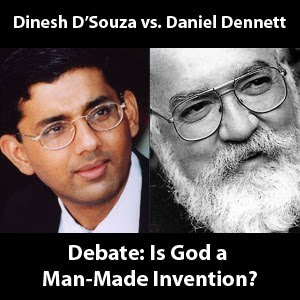 Dinesh D'Souza debates Daniel Dennett on the topic: Is God a Man-Made Invention? This took place at Tufts University on November 30, 2007.
 William Lane Craig debates Lewis Wolpert on the topic: Is God a Delusion? Moderated by John Humphrys, with an entertaining discussion time at the end. Also added to the WLC Audio Debate Feed.
 "The Bible encourages people to put their faith in God. Unfortunately, many people equate faith with a blind leap in the dark or wishful thinking. But the faith that the Bible requires is intelligent faith. It is neither blind nor irrational. Biblical faith is a committing trust with an object (God) who is worthy of our faith. No one is asked to sacrifice his intellect when he puts his faith in the God of the Bible."
 Metaphysics: Constructing a World View by William Hasker is a relatively short book (124 pages), but contains a great deal of information. Surprisingly enough, although the topic of metaphysics may sound daunting, the subject matter is presented very simply. The reader will come away with a good overview of metaphysics and the common metaphysical issues.This continues the series of weekly posts dealing with some basic theistic arguments. The purpose here is to introduce the reader to the idea behind each argument. Strengths and weaknesses will be presented after each summary. These are only summaries and springboards for further study in the theistic arguments. See Reason for the Hope Within for more.
 The Please Convince Me Blog recently announced the release of their free apologetics curriculum. Check it out. And don't forget about their excellent podcast.
 In this series of lectures provided by biblicaltraining.org, Dr. Ronald Nash teaches on Apologetics and the History of Philosophy and Christian Thought. Now you have to go right to biblicaltraining.org to get the audio. They do not allow direct linking to their audio files. (Also added to the Ultimate Apologetics MP3 Audio Page.)
 Philosopher William Lane Craig answers some common tough questions in a very clear and concise manner in this series of video Question & Answers. The MP3s are also available for your convenience.
 Saddleback Church recently hosted an Apologetics Conference with a number of great apologists. Now their audio and video are available for listening and viewing online. But if you prefer MP3s or a podcast feed, you can download them right here:
 "Employ your time in improving yourself by other men's writings, so that you shall gain easily what others have labored hard for."
 Philosophy of Religion: Thinking About Faith by C. Stephen Evans is part of the “Contours of Christian Philosophy” series. This book in the series deals with philosophy of religion, defined as critical reflection on religious beliefs.This continues the series of weekly posts dealing with some basic theistic arguments. The purpose here is to introduce the reader to the idea behind each argument. Strengths and weaknesses will be presented after each summary. These are only summaries and springboards for further study in the theistic arguments. See Reason for the Hope Within for more.
 The Theology Unplugged Podcast is an internet radio show that speaks on theological issues of the day, allowing the listener to make informed judgments on the most important theological issues today.... Over 50 MP3s dealing with subjects such as orthodoxy, hermeneutics, inerrancy, trinitarianism, truth, postmodernism, the emergent church, problem passages, and more.
 The Cloud of Witnesses blog covers topics of theology, philosophy, writing, and culture. They kindly asked to know a little more about the owner of Apologetics 315. A two-part interview has been posted.
 Philosopher and apologist Kenneth Samples is doing a series of lectures on the topic of Learning Skills. This is a tremendous series. This is based upon Adler's "How to Read a Book," but Samples adds lots of personal insights and challenges. RSS Feed here.
 "An honest man, armed with all the knowledge available to us now, could only state that in some sense, the origin of life appears at the moment to be almost a miracle, so many are the conditions which would have had to have been satisfied to get it going. But this should not be taken to imply that there are good reasons to believe that it could not have started on the earth by a perfectly reasonable sequence of fairly ordinary chemical reactions. The plain fact is that the time available was too long, the many microenvironments on the earth's surface too diverse, the various chemical possibilities too numerous and our own knowledge and imagination too feeble to allow us to be able to unravel exactly how it might or might not have happened such a long time ago, especially as we have no experimental evidence from that era to check our ideas against."
 The Existence of God (2nd Edition) by Richard Swinburne is an impressive and significant philosophical work on the existence of God. Swinburne’s premise is to weigh the evidence for and against theism and determine which way the balance falls. This review will only summarize his approach and some of the ideas developed in the book.


 |
 |
 |
 |
 |
 |
 |
 |
 |
 |

