Showing posts with label Norman Geisler. Show all posts

Wednesday, June 19, 2013

Norman Geisler vs. Paul Kurtz Debate MP3 Audio

Norman Geisler and Paul Kurtz debate: Christianity vs. Secular Humanism on the John Ankerberg show. This is an older debate, but a classic. An intense debate between Dr. Geisler and Humanist Paul Kurtz (co-author of Humanism Manifesto II). Includes debate on: What is the origin of the Universe? How did life begin on earth? Is Humanism a threat to academic freedom? Is Jesus Christ God? And, Is there a basis for morality?
Full MP3 Audio here.
Be sure to subscribe to the John Ankerberg podcast via iTunes also.
Enjoy.

Friday, December 14, 2012

Norman Geisler Interview Transcript

The following transcript is from an Apologetics 315 interview with Norman Geisler. Original audio here. If you enjoy transcripts, please consider supporting, which makes this possible.

BA: Hello, this is Brian Auten of Apologetics315. Today’s interview is with apologist Norman Geisler. Dr. Geisler is the author, or co-author, of some seventy books and hundreds of articles. He’s taught theology, philosophy, and apologetics on the college or graduate level for fifty years. He has spoken or debated, in some twenty six countries, on six continents. He has a BA, MA, ThB, and Phd in Philosophy, and he’s taught at seminaries in the Unites States including, Trinity Evangelical, and Dallas Seminary. Currently, he’s the Distinguished Professor of Apologetics at Veritas Evangelical Seminary at Murrieta, California. The purpose of this interview is to learn more from Dr. Geisler’s experience as a defender of the faith. Thanks for joining me today, Dr. Geisler.

NG: It’s a pleasure to be with you.

BA: Well, first off, I want to acknowledge the impact that you’ve had on so many in the area of defending the faith. And, your years of faithfulness in this area I’m sure has influenced many people to both understand the faith more and learn how to defend it. So, thank you.

NG: Well, you’re welcome, it’s a privilege to serve.

Saturday, May 12, 2012

Book Review: Defending Inerrancy by Geisler & Roach

God cannot err. The Bible is the Word of God. Therefore, the Bible cannot err.

This simple syllogism sums up the argument for the unlimited inerrancy of Scripture. While there have always been those who denied the historicity of some of its parts (Origen, for example), the view of the Bible’s total inerrancy is “rooted in the early fathers of the church, expressed emphatically in Augustine and Aquinas, expressed explicitly by the Reformers and continued into the 19th century without a major challenge from within the church” (12). However, when Darwin came along, attacks on God and Christianity took on new life, with the inerrancy of Scripture becoming one of the most beleaguered doctrines.

Norman Geisler and William Roach present a detailed study of the issue in Defending Inerrancy: Affirming the Accuracy of Scripture for a New Generation. They begin with a rather dry, but necessary discussion of the history of inerrancy, ending with the International Council on Biblical Inerrancy (ICB I) and that body’s treatise on the subject known as the Chicago Statement. Put forth in 1978, it consists of 19 articles, and was produced along with a Preamble, a Short Statement and an official commentary entitled Explaining Inerrancy by Reformed Theologian R.C. Sproul. Geisler and Roach include the articles in their book. It is imperative that readers familiarize themselves with them because they provide the standard by which all discussions, theories and interpretations of inerrancy are measured by the authors. If anyone deviates from the Chicago Statement, he or she ends up in Geisler and Roach’s doghouse.

Saturday, February 18, 2012

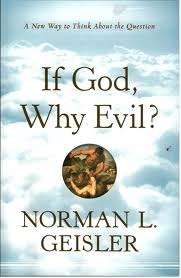
Book Review: If God, Why Evil? by Norman Geisler

In the introduction of his book, Norman Geisler states that, in 50 years of studying difficult questions, the one most asked is, “If God exists, then why is there so much evil in the world?” (9). He adds that, “from a purely apologetic perspective, more skepticism, agnosticism and atheism have sprung from an inability to answer various aspects of evil than any other single issue” (10).

These facts are the motivation behind his writing of If God, Why Evil?  The prolific author of more than 50 books begins his discussion by providing the three most basic views that people take on the subject:  “Pantheism which affirms God and denies evil, atheism which affirms evil and denies God, and theism which affirms both God and evil” (12).

Saturday, January 14, 2012

Book Review: Christian Ethics by Norman Geisler

Christian Ethics: Options and Issues by Norman Geisler is quite a read. Like Giesler's other books, this one is divided and outlined very clearly. It is easy to follow, but has lots of stimulating content. It is broken into two different parts with 310 pages.

Part 1
Chapter 1: All the Options
In Chapter 1 Geisler introduces the philosophical topic of ethics. He quickly summarizes ten different proposed foundations for ethics (including power, pleasure, human survival, and God's will). He then examines five unique attributes of Christian ethics and concludes by providing examples (using lying) of the different views of ethics.

Wednesday, June 22, 2011

Can Atheists Live Without God? by Norman Geisler MP3

In this audio from The Voice of Truth Podcast, Norman Geisler speaks on the subject: Can Atheists Live Without God? Geisler discusses what atheists say, what the Bible says, and what the evidence shows. He argues that atheists can't live without God logically, morally, psychologically, and religiously.

Interview with Norman Geisler here. Pick up I Don't Have Enough Faith to Be an Atheist also.

Full MP3 Audio here. (55 min)
Enjoy

Monday, May 30, 2011

Apologist Interview: Norman Geisler

Today's interview is with apologist Norman Geisler, Distinguished Professor of Apologetics at Veritas Evangelical Seminary and author of over 70 books. He answers a variety of questions and topics: how he got into apologetics, his greatest influences on his own thinking, the change on the apologetics landscape in the past decades, his suggested required reading for all apologists, the kinds of arguments he has encountered and how they have affected him, advice for studying arguments, the growth of apologetics in the church, the top three topics to focus on, skills apologists should develop, pitfalls to avoid, areas that should be strengthened, the necessity of theology, what he feels the strongest argument is for God's existence, learning from those who disagree, one's prayer life and integrity, favorite illustrations, advice for studying in the field, and more.

Full Interview MP3 Audio here. (44 min)

Books by Dr. Geisler include:
• Christian Apologetics
• Baker Encyclopedia of Christian Apologetics
• I Don't Have Enough Faith to Be an Atheist
• If God, Why Evil?
• Conversational Evangelism
• Christian Ethics: Contemporary Issues and Options

You may also enjoy An Apologetic for Apologetics (article) by Dr. Geisler.

Enjoy.
Subscribe to the Apologetics 315 Interviews podcast here or in iTunes.

Friday, January 21, 2011

Norman Geisler Podcast

This 4-minute apologetics podcast is by Norman Geisler, who is the author or co-author of some 70 books and hundreds of articles. See Geisler author page here. See other Geisler resources on Ap315 here. Entitled "The Voice of Truth," this podcast presents Geisler's nutshell answers to dozens of issues.

Get the RSS feed here, or subscribe in iTunes here.

Enjoy.

Saturday, November 13, 2010

Book Review: Conversational Evangelism by David and Norman Geisler

Conversational Evangelism: How to Listen and Speak So You Can Be HeardConversational Evangelism: How to Listen and Speak So You Can Be Heard by Norman and David Geisler is a practical guidebook which focuses on meaningful personal interactions in pre-evangelism and building bridges to the Gospel. It is not a script or method book – rather, it is a substantive training tool for finding out where people are and communicating with them effectively. As Ravi Zacharias puts it in the introduction, “the all-important key in evangelism is to listen beyond the question to the questioner. To answer the question but not the questioner is as much a breakdown as a faith that is not lived out in the practical.” (10) And so the overall goal of the book is to train Christians to thoughtfully approach their interactions with others while using an approach that is appropriate: “Not everyone is at the same point in their openness to the Gospel, and we need to use different approaches depending on someone’s spiritual openness.” (18)

Saturday, November 06, 2010

Book Review: The Apologetics of Jesus by Norman Geisler & Patrick Zukeran

The Apologetics of Jesus: A Caring Approach to Dealing with DoubtersThe Apologetics of Jesus: A Caring Approach to Dealing with Doubters by Norman Geisler and Patrick Zukeran is a guidebook for apologetic methodology based on the way Jesus communicated. As the authors put it, “Despite the fact that Jesus was an apologist and that by common consent he was probably the greatest teacher ever, it is strange indeed that no one has written a major work on the apologetic methods of Jesus.”(11) Geisler and Zukeran therefore go on to build a case for apologetic methodology by looking at Jesus’s use of testimony, miracles, the resurrection, reason, parables, discourse, prophecy, and the like. This review will explore some of the elements the authors use to make their case.

Tuesday, November 10, 2009

Glossary of Philosophical, Ethical, and Biblical Terms

In conjunction with our series of posts for Terminology Tuesday, here is a more comprehensive quick-and-useful guide to philosophical, ethical, and biblical terms by Norman Geisler (more Geisler stuff here).

See the Glossary of Philosophical, Ethical, and Biblical Terms here.

Enjoy.

Also highly recommended is the Pocket Dictionary of Apologetics & Philosophy of Religion.

What was last year's post? See here.

Monday, September 14, 2009

Saddleback Apologetics Conference Audio MP3 and Video

Saddleback Church recently hosted an Apologetics Conference with a number of great apologists. Now their audio and video are available for listening and viewing online. But if you prefer MP3s or a podcast feed, you can download them right here:

• How Can I Know God Exists? - Dinesh D'Souza - MP3
• How Did the Universe Begin - William Lane Craig - MP3
• If God Exists, Why is there Evil? - Norman Geisler - MP3
• Has Science Made Belief in God Obsolete? - J.P. Moreland - MP3
• What Do the Gospels Really Say About Jesus? - Darrell Bock - MP3
• How Can I Defend My Faith Without Sounding Defensive? - Greg Koukl - MP3

RSS feed here. Subscribe directly in iTunes here. (HT: Rob)

Enjoy.

Friday, June 19, 2009

Apologetics Interview with Norman Geisler MP3 Audio

Apologist Harold C. Felder's website GivingAnAnswer.org hosts a podcast with a number of good audios, including this great interview with Dr. Norman Geisler on apologetics. Other interviews can be found here.

Full MP3 Audio here.

Enjoy.

Wednesday, May 06, 2009

Apologist Profiles by Truthbomb

The Truthbomb Apologetics blog has been featuring an ongoing series of apologist profiles from such Christian apologists as William Lane Craig, J.P. Moreland, Ravi Zacharias, Paul Copan, Gary Habermas, Norman Geisler, Ron Rhodes, and Greg Koukl. Each profile provides articles, media, and links to other resources by each apologist.

Enjoy.

Monday, May 04, 2009

Book Review: Come Let Us Reason by Norman Geisler

Come Let Us Reason: An Introduction to Logical Thinking by Norman Geisler and Ronald Brooks is a useful introduction to logic written with the Christian in mind. This sets the text apart in the area of the examples used and some of the commentary involved throughout each chapter. This does not change the content of the logic being taught, but it does add another dimension to the book. We are exhorted, “The next best thing besides godliness for a Christian is logic.”1

In the chapter entitled The Whats and Whys of Logic, the authors tackle many of the objections to studying logic, as well as pointing out the Christian’s responsibility to engage in logical thinking. The authors move through the foundational material quickly. They don’t offer much reinforcement beyond their initial explanations, so the potential reader can be advised to understand it the first time. In some of the earlier chapters it seems as if the authors are coaching the reader along, “see, that wasn’t that hard now was it?” Thankfully, this treatment ends about half way through. Each chapter is followed by a good number of exercises, many with examples drawn from either a Biblical or apologetical context.

Formal and informal fallacies are addressed early on, and the examples are really excellent. Chapter 7, Uncovering Logic in Literature shows the student a practical method of analyzing arguments as they appear in common print (e.g., newspapers, books, etc.). This entails looking for the conclusion, reconstructing the sentences, looking for the middle term, and so on. Geisler and Brooks move on to induction and present a very helpful section on probability. The final chapters deal with the scientific method, its uses, and fallacies of the scientific method. An appendix with truth tables is included, followed by a helpful glossary.

Come Let Us Reason should not be the only book one reads on logic, as there are some areas where the authors are not as clear as they could have been. Without other supplementary texts, the reader may not grasp some aspects fully. However, as a whole, Geisler and Brooks have contributed a helpful introductory text to logic from a Christian perspective.

1 Norman Geisler & Ronald Brooks, Come Let Us Reason: An Introduction to Logical Thinking (Grand Rapids, MI: Baker Books, 1990), p. 7.

Thursday, April 16, 2009

New Atheism by Norman Geisler MP3 Audio

Norman Geisler talks about the many new forms of atheism that exist today. He also presents arguments for theism over atheism.

Full MP3 Audio here.
Original video here.

Enjoy.

Saturday, January 31, 2009

Book Review: Philosophy of Religion by Norman Geisler and Winfried Corduan

Philosophy of Religion by Norman Geisler and Winfried Corduan is a very helpful text providing a thorough treatment of philosophy of religion. The book is broken into four sections: 1) God and experience; 2) God and Reason; 3) God and Language; and 4) God and Evil. The authors write in a readable style and provide a good outline of thought throughout each section. The goal of the book is to give the reader a comprehensive overview of the rational, philosophical foundations of religious experience and they key issues that philosophy of religion addresses.

In section one Geisler and Corduan explore the nature of religious experience and its connection with the idea of the Transcendent. They aim toward the goal of showing how one might test the reality of religious experiences: “There is no reason to doubt that people have religious experiences. What is subject to question is the basis in reality for such experiences.”1 Clearly, the goal of the authors is to not only explore the nature of religious experiences, but to define the criterion by which one may discern true experience from false experience, as well as outline the rational arguments and implications for true religious experience:
…the denial of the reality of the Transcendent entails the assertion that not only some people have been deceived about the reality of God but that indeed all religious persons who have ever lived have been completely deceived into believing there is a God when there really is not. For if even one religious person is right about the reality of the Transcendent, then there really is a Transcendent.2
Section two delves into all of the classical arguments for the existence of God. This section alone could be worth the price of the book, as the authors lay out the full presentation and full critique of each argument in detail, from their weakest forms to their strongest. Geisler and Corduan are up-front with their own views on the validity (or lack of validity) of each argument, as they seek to show the strengths and weaknesses. It should be noted that the authors are looking for the ideal argument to be as unassailable as possible. They show the honest shortcomings of certain teleological arguments, the ontological argument, and weak areas of the cosmological arguments. This is not to say that the arguments have no usefulness; instead the authors provide their own reworking of the strongest possible arguments for God's existence.

Section three covers the traditional discussion of religious language: how do we define God and how can we speak meaningfully of Him? How is religious language used? Equivocal, univocal, and analogical language are all thoroughly outlined, as well as positive and negative religious language.

The authors conclude with an extremely thorough treatment of the problem of evil. This is divided into four sections. First, they define the problem of evil in its various and strongest forms. Next, the metaphysical problem of evil is discussed. Third, the moral problem of evil is covered. And finally, the physical problem of evil is addressed. This multi-faceted approach gives proper appreciation to the various aspects of the issue and provides a final, plausible answer to the problem of evil based upon the previous content. For those looking for a solid source for working through the problem of evil, Geisler and Corduan present an excellent resource. Philosophy of Religion can be highly recommended, like other books by Geisler, as a standard text.

1 Norman Geisler and Winfried Corduan, Philosophy of Religion (Grand Rapids, MI: Baker Book House, 1998), p. 63.
2 Ibid., p. 76.

Saturday, January 24, 2009

Book Review: Introduction to Philosophy by Norman Geisler and Paul Feinberg

Introduction to Philosophy by Norman Geisler and Paul Feinberg is an excellent work that introduces the student to the broad subject of philosophy from a Christian perspective. Although providing a wide overview, the authors effectively retain a good depth in the subject matter throughout, providing plenty of detail and explanation.

The book is broken into five parts: first, an introduction to philosophy; second, epistemology; third, the nature of reality; next, the subject of God; and fifth, ethics. In providing a good introduction to the subject, Geisler and Feinberg offer a concise definition of philosophy: “Philosophy is, then, the critical analysis of fundamental concepts of human inquiry, and the normative discussion of how human thought and action ought to function, as well as the description of the nature of reality.”1

The authors detail the disciplines within philosophy, discuss the methods and models used in philosophy, and the tools used in thinking. These include an introduction to logic and detailed critiques of each methodology discussed. They note that for the Christian, no philosophical methodology can eliminate the possibility of divine revelation. Also, the authors present the challenge of Christian philosophy:
“Without a thorough knowledge of philosophy the Christian is at the mercy of the non-Christian in the intellectual arena. The challenge, then, is for the Christian to ‘out-think’ the non-Christian in both building a system of truth and in tearing down systems of error.”2
Part Two’s discussion of knowledge is an overview of epistemology. Can we know? Is certainty possible? How are beliefs justified? Within this section is a thorough critique of skepticism. Also of note is a discussion of the various kinds of certainty. This is helpful in clarifying the question of how on can “know” anything.

Part Three discusses the nature of reality and metaphysics. Particularly helpful in this section would be the detailed overview of the theories of truth. Part Four covers “What is the Ultimate” – a two-part section dealing first with the relationship between faith and reason, followed by a portion devoted to what is meant by God and the existence of God. The problem of evil is briefly addressed. The relationship between faith and reason neatly addresses the positive elements of each of the five views: revelation only, reason only, reason over revelation, revelation over reason, and reason and revelation. The portion devoted to arguments for the existence of God is introductory and sufficient, but by no means comprehensive. For a more comprehensive discussion of the various arguments for the existence of God, this reviewer recommends Geisler and Corduan’s Philosophy of Religion.

The final section covers ethics; what is good or right. Right is defined, the method by which we know right and wrong is discussed, and moral duties are explored. Again, this section, although introductory, does seem to manage a good depth in the subject by thoroughly illustrating the competing philosophies among ethicists. Moral dilemmas are also surveyed here.

Introduction to Philosophy by Geisler and Feinberg is worthy to be used as an introductory text for the philosophy and apologetics student. Its thorough overview and helpful end-of-chapter summaries make it a fine starting point and good reference work.

1 Norman Geisler and Paul Feinberg, Introduction to Philosophy (Grand Rapids, MI: Baker Books, 1980), p. 17.
2 Ibid., p. 73.

Monday, December 08, 2008

The Shack: Helpful or Heretical? by Norman Geisler

"The Shack: Where Tragedy Confronts Eternity by William P. Young (Wind Blown Media, 2007, 264 pp) is a New York Times best seller with well over a million copies in print. Literally hundreds of thousands have been blessed by its message, but its message is precisely what calls for scrutiny. Responses to The Shack range from eulogy to heresy..."

Full Review by Norman Geisler here.

Friday, September 19, 2008

Reasons to Trust the Scriptures by Norman Geisler - PDF download

How do I know the Bible is true? Norman Geisler gives sound reasons to trust the scriptures in this 8 page reference.

Download PDF here.

Enjoy.

Blog Archive

Amz