Showing posts with label worldviews. Show all posts

Tuesday, July 01, 2014

Terminology Tuesday: Pluralism

Religious Pluralism: Descriptively, a situation characterized by a number of alternative religions and diverse perspectives on religion, with the resulting problem for adherents of each view of what attitude to take toward the other views. The contemporary world is in most places undeniably pluralistic in this sense. However, for some, the term pluralism has taken on a normative sense in which it implies an endorsement of this plurality and a refusal to see one religion as truer than others or superior to others in any way.1

1. C.Stephen Evans, Pocket Dictionary of Apologetics & Philosophy of Religion (Downers Grove, IL: InterVarsity Press, 2002), p. 93.
Saturday, March 15, 2014

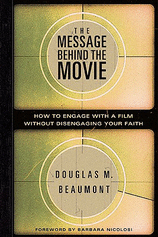
Book Review: The Message Behind the Movie

Movies are an interesting part of today's culture. They address hot issues by connecting to people through the arts. They are the products of fallen people created in God's Image thus they will contain both good and bad elements, with imbalances on both sides. Many Christians do not think very deeply about these realities of this form of entertainment, so they often take extreme views of either over-indulgence or avoidance, and few see movies as open opportunities to discuss the Gospel with skeptics.

In his book The Message Behind the Movie: How to Engage With A Film Without Disengaging Your Faith Doug Beaumont attempts to address these issues. He divided the book into three "Acts" that deal with cinematic theory, evangelical application, and personal application. The book is subdivided into eleven chapters and is a mere 159 pages. This review is intended to be a chapter-by-chapter summary to give the potential reader a taste of the book's content.

Sunday, January 12, 2014

William Abraham on Christianity and Worldview

"Religious belief should be assessed as a rounded whole rather than taken in stark isolation. Christianity, for example, like other world faiths, is a complex, large-scale system of belief which must be seen as a whole before it is assessed. To break it up into disconnected parts is to mutilate and distort its true character. We can, of course, distinguish certain elements pin the Christian faith, but we must still stand back and see it as a metaphysical system, as a world view, that is total in its scope and range."

—William Abraham

"Soft Rationalism," in Philosophy of Religion: Selected Readings, 2nd ed., ed. Michael Peterson et al., p. 99.

Thursday, January 09, 2014

How do you know that Christianity is the one true worldview? by Ravi Zacharias


Enjoy this video by Ravi Zacharias (RZIM) on the question: How do you know that Christianity is the one true worldview? Exclusivity is one of the most popular charges leveled against the Christian faith. Here, author and apologist Ravi Zacharias and RZIM speaker John Njoroge challenge the assumption that Christianity is alone in making exclusive claims.

Saturday, August 17, 2013

Book Review: Inerrancy and Worldview by Vern Poythress

The past few years have seen the rise of inerrancy—an issue that many thought was resolved come to the forefront of current theological debate, once again. Inerrancy is an important theological truth that while not directly tied to the Gospel itself nevertheless affects how one will ultimately understand issues directly related to the Gospel such as redemption, sin, justification among a host of other issues.  For this reason, the issue of inerrancy while not “of first importance” certainty ranks way up there on the priority of Christian doctrine.

It really shouldn’t surprise Christians that inerrancy is becoming an issue again at all—since the issue of inerrancy is directly tied to the question of who is authoritative: God or man. Theological liberalism has convinced many parts of Christianity today that inerrancy is unimportant because according to them the Bible is a book full of errors. The sad thing is when one looks at the churches of those who deny the inerrancy of the Scriptures it becomes readily apparent who is in “charge”—man and not God. Making much of man is not the church’s mission, but making much of Jesus and spreading His fame to the nations is the Church’s mission. This is exactly why the issue of inerrancy is so important because it deals definitively not just with whether the text of Scripture is with or without error but rather with the larger question of who is authoritative, God or man. This is also the reason why I was excited when I heard about Dr. Vern Poythress new book Inerrancy And Worldview: Answering Modern Challenges To The Bible, because in the past few years I’ve been spending more time studying the doctrine of inerrancy. Through my study, I have become increasingly convinced that this issue will be one of the biggest theological battles in our generation.

Wednesday, July 10, 2013

Ted Turnau Interview Transcript

The following transcript is from an Apologetics 315 interview with Ted Turnau. Original audio here. Transcript index here. If you enjoy transcripts, please consider supporting, which makes this possible.


BA: Hello, this is Brian Auten of Apologetics315. Today’s interview is with Ted Turnau. Ted is a college lecturer who teaches Cultural Studies and Religion in Prague, Czech Republic. His interest is in issues of popular culture, imagination, and how they relate to the Christian faith. He is also author of Popologetics: Popular Culture in Christian Perspective. I had the privilege of meeting Ted at the European Leadership Forum in Hungary, where he was teaching about apologetics and popular culture, and evaluating the worldviews of popular movies. The purpose of today’s interview is to explore the relationship between popular culture and the task of apologetics, and get Ted’s insights into how we can be better apologists. Well, thanks for joining me today, Ted.

TT: It’s great to be here, thanks Brian.

BA: Well, first off, can you tell our listeners a bit about your background, and how did you end up in the Czech Republic?

Tuesday, November 13, 2012

Terminology Tuesday: Worldview

Worldview: Comprehensive set of basic or ultimate beliefs that fit together in a consistent or coherent manner. A full worldview would include answers to the following questions and more: What kinds of realities are there, and what is ultimately real? What explanation can be given of reality? What is knowledge, and how do we gain it? What is it to have a reasonable or justified belief? What is the good, what is the good life for a human person and how does a person achieve such a life? What is beauty, and how is it related to reality and goodness?1

1. C.Stephen Evans, Pocket Dictionary of Apologetics & Philosophy of Religion (Downers Grove, IL: InterVarsity Press, 2002), p. 124.

Saturday, November 10, 2012

Book Review: Liberal Arts for the Christian Life

“When you see a book with Leland Ryken’s name, buy it; ask questions later.” For the past 25 years this has been my mantra whenever anyone has wondered about books for the humanities. Leland Ryken’s 1981 volume The Christian Imagination brought together essential essays linking a Christianly coherent liberal arts viewpoint for many. Ryken’s small, exceptional 1985 introduction to a Christian interpretation of literature, Windows to the World: Literature from a Christian Perspective, stoked my own literary fires, lighting the torches of my students. Ryken’s study Redeeming the Time: A Christian Approach to Work and Leisure still stands as the most direct, accessible work on the twin subjects ever written. Of course his books on Bible teaching, the Puritans, Scripture as literature, and Christian interpretation of the classics add to the depth of any learner’s understanding from the pen of a world class scholar. Over the last decade, Ryken has committed his attention to Bible translation. The Word of God in English: Criteria for Excellence in Bible Translation (2002) gives explanation for his oversight of The English Standard Version (2001) including the first ever Literary Study Bible (2007). Lest one would think Ryken simply a writer, he has spent 40 years at Wheaton College training students to properly understand the English canon from a Christian worldview. Consider the multiplicity of students who have had the privilege of Ryken’s literary erudition and expertise. How many homes and churches have a broadened understanding of life having sat under Ryken’s tutelage?!

Saturday, September 01, 2012

Book Review: Hollywood Worldviews by Brian Godawa

Brian Brian Godawa is a professional screen writer with successful movies like To End All Wars, The Visitation, and Change Your Life to his credits. He is also an evangelical Christian with a passion for teaching biblical discernment in regard to films. In Hollywood Worldviews, he writes that “God loves movies”[1] because seventy percent of the Bible is communicated through creative genres like narrative, stories and poems. It follows that God uses drama as a powerful means to teach truth. It also follows that the secular world uses them to promote a different agenda. Whether one is aware of it or not entertainment mediums are promoting a worldview. Accordingly, Christians should cultivate a sophisticated understanding of how those mediums are employed in our culture. Godawa states his goal succinctly, “to help the viewer discern those ideas that drive the story to its destination and see how they influence us to live our lives-to understand the story behind the story.”[2] He examines two equal but opposite errors: cultural desertion (anorexia) and cultural immersion (gluttony). The book is divided into three sections Act 1: Storytelling in Movies, Act 2: Worldviews in Movies, and Act 3: Spirituality in Movies. The paper will attempt to show that the book is valuable for developing a discerning eye.

Wednesday, November 02, 2011

J.P. Moreland on the Christian Worldview

Wednesday, July 20, 2011

Apologetics and Worldview Homeschool Curriculum

Looking for homeschool curriculum from a Christian worldview? You may want to check out Apologia's various products that help teach apologetics, science, and worldview. In Tom Gilson's review of the Worldview curriculum, he says, "If you’re homeschooling, this series is a must-buy. If you’re not homeschooling—it’s still a must-buy. Your children, our next generation of Christians, desperately need to understand worldview from a biblical perspective." Download the full PDF catalogue of their resources (10mb) to see it all.

Check out Apologia here.

Enjoy.

Thursday, June 30, 2011

World Religions Index

Looking for info on the major world religions as well as some of the major cults? The single best starting place is the excellent World Religions Index, from LeaderU. Unlike other "all about" sites, this site has no advertising. You'll find clear, concise outlines of the major key beliefs of cults and world religions, and their comparisons with Biblical Christianity.

• Go to the Cults page
• Go to the World Religions page
• Read articles on world religions here.
• Read personal stories from those involved in these religions here.
• Go to the main index page here.

Enjoy.

Wednesday, April 06, 2011

Robert Bowman Apologetics Audio

If you have heard the recent interview with Robert M. Bowman, you may also be interested in listening to some of his courses he taught with Reclaiming the Mind's Theology Program. If so, you can download all of the electives with this RSS feed. Or see each audio file available below, each with its own RSS feed for easy downloading or adding to iTunes.

World Religions (RSS)
1 | 2 | 3 | 4 | 5 | 6 | 7 | 8
The Historical Jesus (RSS)
1 | 2 | 3 | 4 | 5 | 6 | 7 | 8 | 9 | 10
Science and the Bible (RSS)
1 | 2 | 3 | 4 | 5 | 6 | 7 | 8 | 9
Apologetics Methods (RSS)
1 | 2 | 3 | 4 | 5 | 6 | 7 | 8 | 9
Understanding Mormons & Jehovah's Witnesses (RSS)
1 | 2 | 3 | 4 | 5 | 6 | 7 | 8
Introduction to Christian Apologetics (RSS)
1 | 2 | 3 | 4 | 5 | 6 | 7 | 8 | 9 | 10 | 11 | 12 | 13 | 14 | 15 | 16 | 17 | 18 | 19

Also added to the Ultimate Apologetics MP3 Audio page.
Enjoy.

Saturday, April 02, 2011

Book Review: World Religions by Warren Matthews

World ReligionsNow in its sixth edition, World Religions by Warren Matthews is an extremely useful textbook and reference book detailing the history, beliefs, and practices of the world's faith systems. This overview will give the prospective student an idea of what to expect from this text.

World Religions is broken into 5 sections, each dealing with a different "family" of religions. Religions of tribes and city states (religions of the Americas and Africa), religions arising in India (covering Hinduism, Buddhism, Jainism and Sikhism), religions of China and Japan, ancient religions of Iraq and Iran, and religions of the family of Abraham (covering Judaism, Christianity, Islam, new forms of older religions, and globalization and world religions). The structure of the book is suitable for both linear and non-linear study.

Sunday, March 13, 2011

Sunday Quote: Ravi Zacharias on World Religions

"Anyone who claims that all religions are the same betrays not only an ignorance of all religions but also a caricatured view of even the best-known ones. Every religion at its core is exclusive."

- Ravi Zacharias, Jesus Among Other Gods, p. 7

Saturday, February 26, 2011

Book Review: Five Sacred Crossings by Craig Hazen

Five Sacred Crossings: A Novel Approach to a Reasonable Faith (ConversantLife.com®)Five Sacred Crossings by Craig Hazen is a work of fiction with an apologetics punch. Though fictional, the story is realistic and the content compelling. This short summary is less of a review and simply more of a recommendation. Here's a quick idea of what to expect from the content and the story without spoiling the plot.

The main character is Dr. Michael Jernigan, a college professor who teaches comparative world religions. Due to his expertise in languages, he finds himself caught up in an interesting situation involving a terrorist plot to detonate a radioactive “dirty bomb.” As the terrorist plot is investigated, Dr. Jernigan is also teaching at the local community college, where questions about religious extremism unfold into an exploration of the truth claims of world religions.

Thursday, February 10, 2011

Worldview 101: Worldview Training Camp for Teens

Worldview 101 is a Christian worldview training camp for teens, equipping them in the areas of Christian doctrine, ethics, and apologetics. Found online over at www.wv101.org, the organization's instructors include the likes of Paul Copan, Greg Ganssle, Chad Meister, James Spiegel, Douglas Blount and more.

Their blog is here. And be sure to check out the info on training camps.  Additional FAQ here.

Check it out.

Sunday, December 12, 2010

Sunday Quote: Nick Pollard on Worldviews

"As inviduals develop, they do seem to adopt certain answers to the fundamental questions of life. These answers are put together into a comprehensive system - a view of the world. At the same time, however, this view of the world becomes the way they view the world. It becomes the spectacles through which they look, the grid upon which they organize reality. This view affects the way they answer the fundamental questions of life, and so on. If we understand worldviews this way, we can see why they are so hard to change. They tend to become firmly entrenched because they constantly reinforce themselves through the self-sustaining feedback loop."

- Nick Pollard, Evangelism Made Slighly Less Difficult, 35-36

Sunday, December 05, 2010

Sunday Quote: James Sire on Worldviews

"A worldview is a commitment, a fundamental orientation of the heart, that can be expressed as a story or in a set of presuppositions (assumptions which may be true, partially true or entirely false) which we hold (consciously or subconsciously, consistently or inconsistently) about the basic constitution of reality, and that provides the foundation on which we live and move and have our being."

- James Sire, The Universe Next Door (Kindle:108)

Monday, April 05, 2010

Essay: The Christian Worldview is the Best Explanation by Jim Wallace

The Christian Worldview is the Best Explanation by Jim Wallace
As a detective, I have an interesting job. I have to enter the crime scene and assess the evidence in front of me: is this a natural death or a homicide? If it's a homicide, which suspect best explains the evidence at the scene? While there may be a number of potential suspects that account for some or most of the evidence we see, one suspect will usually emerge as the "best" in that he or she most completely (and most reasonably) explains the evidence. This suspect simply makes the most sense of what I am seeing. I then "infer", from the fact that this suspect provides the best explanation (given the evidence) that the suspect is, in fact, the true killer. This process of "inferring to the best explanation" is sometimes called "abduction". I understand the importance of examining a number of potential solutions (suspects) and carefully assessing which of these solutions best explains the evidence. When I utilize the process of abduction, I end up with an explanation that is simple and coherent and adequately explains the evidence in question. Is it "possible" that I might have the wrong suspect? Sure, especially if I grant that anything and everything is possible. But is it "reasonable" to believe that someone else committed this crime when my final suspect accounts for all the evidence at the crime scene? No. And that's the beauty of utilizing abduction in this manner. I arrive at a place of "evidential sufficiency" and I'm able to make sense of what I am seeing. (MP3 Audio | RSS | iTunes)

Blog Archive

Amz